
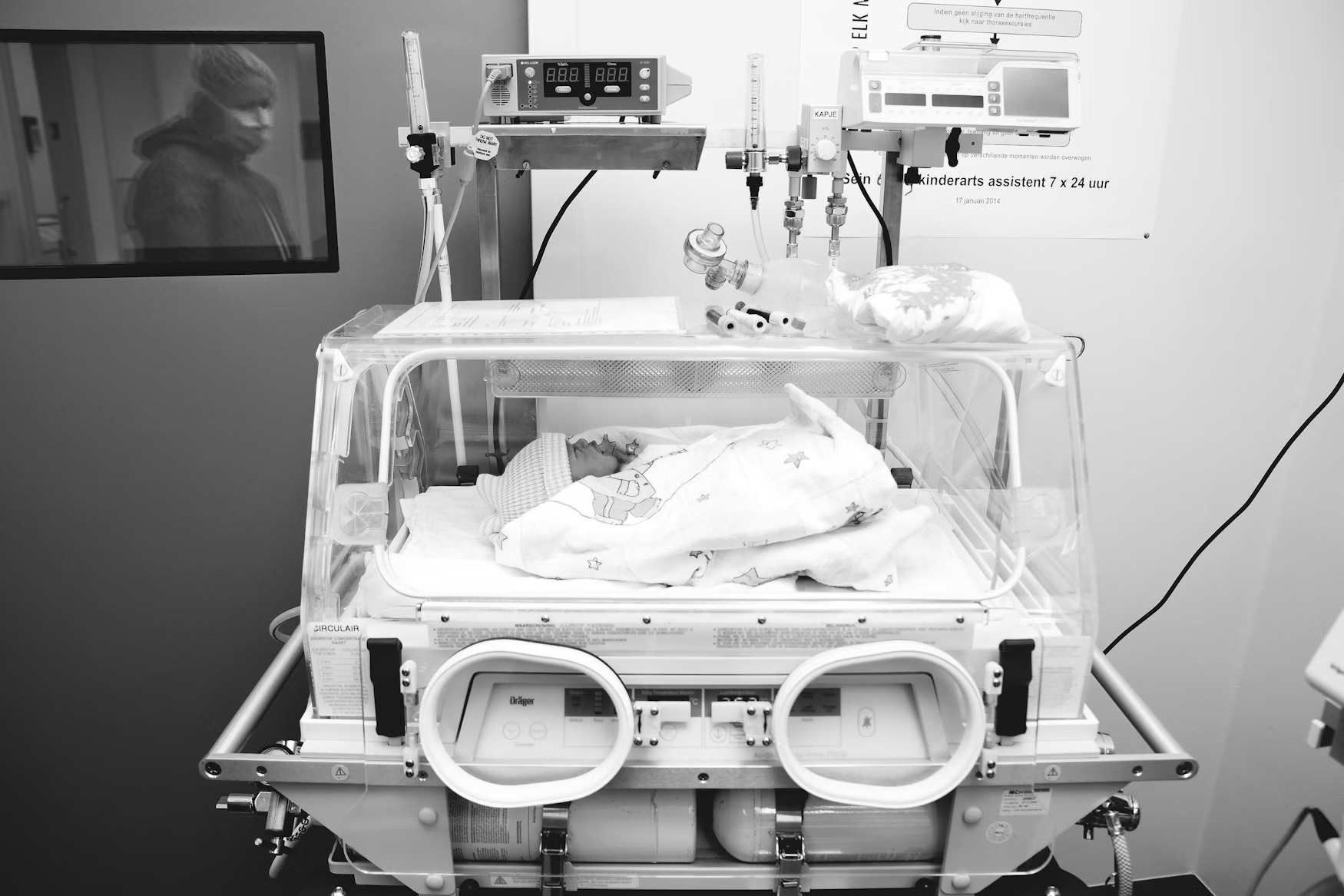
A water main breaks near your hospital at 6 a.m. By 7:30, the campus has lost its supply, and the facilities manager warns that boilers and sterilization equipment will be offline within the hour. In the NICU, eleven infants depend on warmed air and continuous monitoring. The charge nurse asks a fair question: what does our plan say to do right now?
That question is answered—or not—by your hospital emergency operations plan. A hospital emergency operations plan, or EOP, is the master document describing how a facility prepares for, responds to, and recovers from emergencies of all kinds. It sits above any single procedure. Your evacuation plan, fire response, and power-failure protocol are all chapters within it.
Many facilities own strong evacuation procedures but lack a coherent plan that ties everything together. This guide explains how to build an EOP that holds up under pressure, with particular attention to NICUs, maternity wards, and nurseries, where patients cannot speak, walk, or wait.
What an Emergency Operations Plan Actually Is
An EOP is a comprehensive framework, not a single checklist. It describes the whole arc of an emergency: preparation before anything goes wrong, coordinated response during the event, and recovery afterward.
People often confuse the EOP with an evacuation plan. An evacuation plan answers one question—how do we move patients out safely? The EOP answers many more: Who is in charge? How do staff communicate when phones fail? Where do supplies come from? How do we keep utilities running? Is evacuation even the right choice, versus sheltering in place? The EOP is the whole book; evacuation is one important chapter.
Modern planning favours an all-hazards approach. Rather than a separate plan for every disaster, you build one flexible structure that adapts. A tornado, a chemical spill, and an extended outage all demand the same core capabilities: clear command, working communication, protected resources, and trained staff. For infant units, that framework still needs hazard-specific annexes, because protecting eleven NICU infants during a slow flood differs from protecting them during a sudden interior fire.
The Six Core Elements Regulators Expect
The Joint Commission’s emergency management standards and the CMS Emergency Preparedness Rule both organize planning around a recognizable set of functions. Six of them form the backbone of nearly every credible EOP:
- Communications — how staff reach each other, outside agencies, and families, with redundancy for when phones fail. For a NICU, this includes accounting for every infant and coordinating with receiving facilities.
- Resources and assets — supplies, equipment, and mutual aid, including infant-specific items like transport equipment, warming methods, and dedicated evacuation devices.
- Safety and security — lockdown, access control, and coordination with law enforcement. Infant units carry a permanent abduction risk that intensifies during chaos.
- Staff responsibilities — roles, decision authority, and chain of command. Name roles rather than individuals, since the usual person may not be present at 3 a.m.
- Utilities management — power, water, medical gases, heating, and ventilation. NICUs must be a top priority for backup power and temperature control.
- Patient clinical and support activities — how care continues, how patients are tracked, and how evacuation happens when necessary.
Each element should be addressed for the facility as a whole and adapted for vulnerable infant patients.
Conducting a Hazard Vulnerability Analysis
You cannot prepare for everything equally, so the hazard vulnerability analysis (HVA) sets priorities. It identifies the events most likely to affect your facility and ranks them by probability and potential impact. A coastal hospital weighs hurricanes heavily; an older building weighs internal fire and utility failure.
The output is a ranked list that drives your planning effort. Top hazards get detailed, practiced annexes; lower ones may need only a brief mention.
A facility-wide HVA can underweight infant areas. A power outage a medical-surgical floor tolerates for an hour becomes urgent in a NICU within minutes. So review each top hazard through the lens of your most vulnerable patients, asking what extra capability the NICU needs that the rest of the hospital does not. The answers populate your infant-specific annexes.
Incident Command: Who Runs the Response
When an emergency begins, someone must take charge, and everyone must know who. The Hospital Incident Command System (HICS) provides a standard structure: an incident commander holds overall authority, with section chiefs managing operations, planning, logistics, and finance. It scales—a small event activates a few roles, a major disaster fills the chart—and it is compatible with the systems outside agencies use.
For infant care leaders, the practical task is knowing where your unit fits: who reports the NICU’s status to the incident commander, who has authority to order an infant evacuation, and who coordinates transfers to receiving NICUs. Clear activation criteria prevent both under-reacting to a serious event and over-mobilizing for a minor one.
Protecting Infant Patients Within the Plan
Now to the part infant units must own: the provisions that keep the smallest patients safe when general procedures aren’t enough.
The evacuation annex. Evacuation is one possible response, not the default. Many emergencies are better answered by sheltering in place or moving patients horizontally to a safe area on the same floor. Still, every infant unit needs a credible evacuation annex for events that demand it. The annex must face the realities that make infant evacuation distinct: infants cannot self-evacuate, each needs transport equipment, staff are limited overnight, and stairwell descent introduces control challenges.
Equipment shapes what is possible. Carrying infants individually requires roughly one staff member per infant—rarely feasible during a real event. Higher-capacity systems change the math. The EvacuB evacuation sled, for example, accommodates six infants per unit and includes automatic braking for controlled stairwell descent, letting a single staff member move multiple infants at once. Integrated oxygen cylinder cradles also help sustain respiratory support during transport. These capabilities directly affect the staffing assumptions in your annex.
Accountability and continuity. The unit must account for every infant at every stage, pairing relaxed access controls with strict infant accountability. And moving an infant isn’t the end of the task—the plan should describe how staff re-establish monitoring, warming, and respiratory support once patients reach a safe area. Designating receiving areas in advance shortens that gap.
Utilities and Continuity for Infant Care
Infant areas depend on a narrow band of conditions, so the utilities chapter deserves a focused subsection. Backup power is non-negotiable: incubators, warmers, ventilators, and monitors all draw power, so confirm infant areas connect to emergency circuits and that generators carry enough fuel. Temperature and air matter because infants lose heat rapidly, so plan interim warming and prioritize climate control in infant areas. Medical gases support many infants, so describe reserve supply and portable options—transport equipment that carries its own oxygen extends the window for safe movement.
Training, Drills, and Documentation
A plan that lives on a shelf will fail. Use a mix of exercises: tabletop exercises test decision-making and communication, functional exercises test coordination in real time, and full-scale exercises test execution. Infant units benefit from dedicated drills that exercise the actual equipment and the actual stairwell routes their patients would use—problems a tabletop never surfaces.
Finally, keep the EOP current. Review it on a regular cycle and update it whenever your HVA, building, or an exercise reveals a gap. Maintain records of training, drills, after-action reviews, and equipment maintenance. A surveyor reviewing your NICU’s readiness wants to see that the capability described on paper actually exists in practice.
About EvacuB
EvacuB manufactures purpose-built infant evacuation equipment serving NICUs, maternity wards, and well-baby nurseries. Our evacuation systems accommodate six infants per unit, with automatic braking for controlled stairwell descent and integrated oxygen cylinder cradles that support infants requiring respiratory support during transport.
Within an emergency operations plan, infant evacuation capacity often determines whether the staffing assumptions in the evacuation annex are realistic. Equipment that lets a single staff member move multiple infants safely down a stairwell reshapes what a small overnight team can actually accomplish.
Contact us to learn how EvacuB equipment can support the infant care provisions of your facility’s emergency operations plan.
Frequently Asked Questions
What is the difference between an emergency operations plan and an evacuation plan?
An emergency operations plan is the comprehensive master framework covering how a facility prepares for, responds to, and recovers from all types of emergencies—command, communications, utilities, resources, and the decision of whether to evacuate at all. An evacuation plan is one component within it that addresses how to move patients out of a space safely.
What are the six core elements of a hospital emergency operations plan?
Communications, resources and assets, safety and security, staff responsibilities, utilities management, and patient clinical and support activities. These align with Joint Commission standards and federal preparedness requirements in the United States, and each should be adapted for vulnerable populations like infant patients.
What is a hazard vulnerability analysis?
An HVA is a structured assessment that identifies the emergencies most likely to affect a facility and ranks them by probability and potential impact. The ranked results guide where planning effort goes. Infant units often review top hazards through their own lens, since rapid heat loss and dependence on monitoring raise the urgency of events others could tolerate longer.
Where does infant evacuation equipment fit within the plan?
It lives in the resources and assets element and supports the evacuation annex. Equipment capacity directly affects the plan’s staffing assumptions—higher-capacity systems that move several infants per unit, with stairwell braking and onboard oxygen, allow realistic evacuation by the small teams that staff infant units overnight.
A hospital emergency operations plan is the structure that holds everything together when an ordinary day becomes an emergency. It defines who leads, how people communicate, where resources come from, how utilities stay running, and how care continues. Evacuation and fire response are chapters within that framework, not substitutes for it.
For infant units, the plan carries extra weight, because NICU and nursery patients depend on a narrow range of conditions to stay safe. Build the plan from a hazard vulnerability analysis, give it shape through the six core elements and incident command, and keep it alive through realistic drills and ongoing review. Do that, and your staff will have a clear answer to the question every charge nurse eventually asks under pressure: what does our plan say to do right now?
Publication Date: June 2026
Disclaimer
This article provides general educational information about hospital emergency preparedness planning and is not professional medical, safety, legal, or consulting advice. Healthcare facilities should consult qualified emergency management professionals, safety officers, legal counsel, and regulatory authorities to ensure compliance with applicable standards. Emergency operations plans should be developed with input from clinical leaders, facilities staff, and local emergency response agencies familiar with your facility and patient population.
Clinical and medical information is provided for emergency preparedness planning purposes only and should not be used for patient care decisions. Regulatory requirements vary by jurisdiction and change over time—verify current requirements with relevant authorities.