
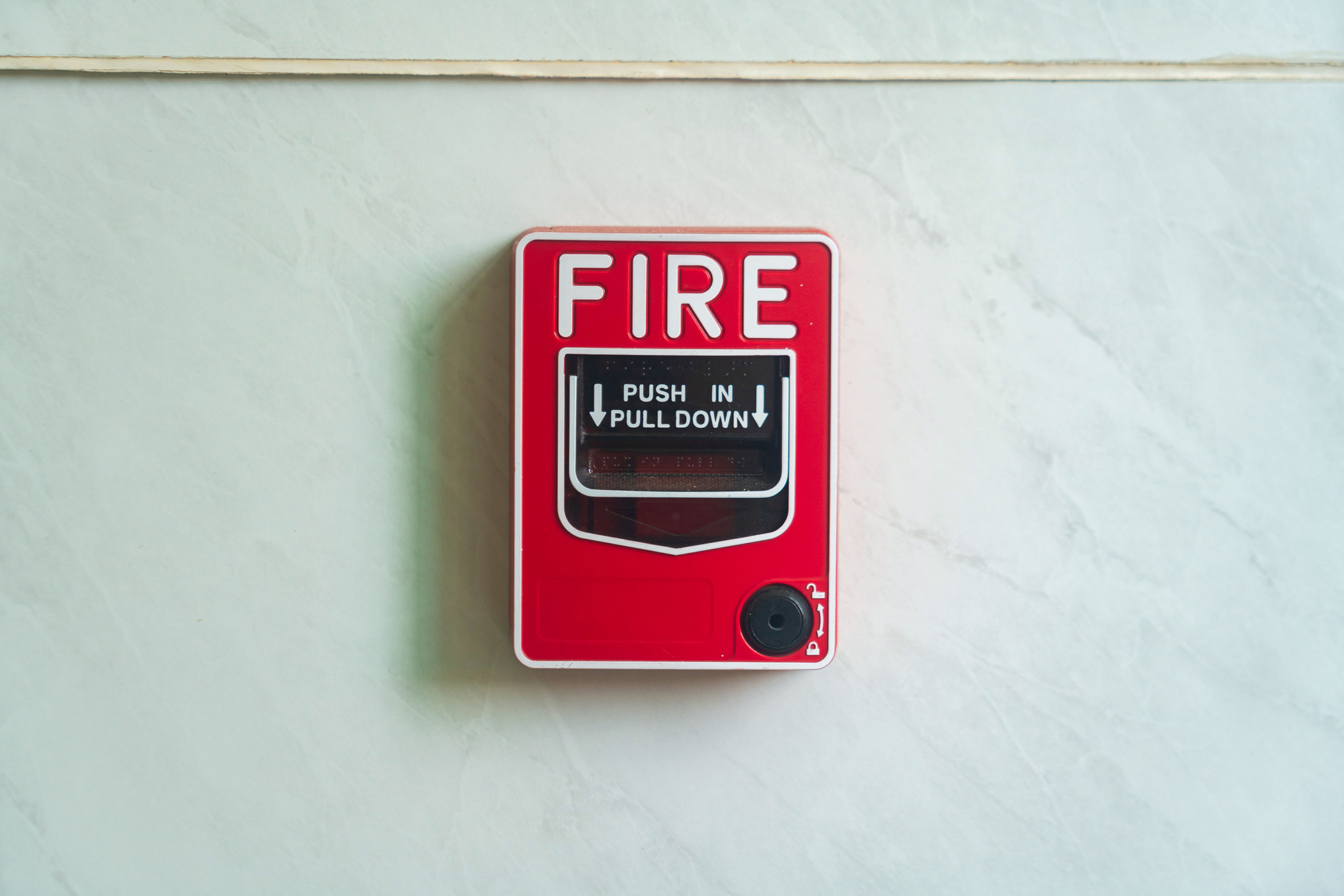
Hospital fires are rare, but when they occur, infant care units face challenges unlike any other area of the facility. Patients who cannot walk, cannot respond to alarms, and depend on equipment that must stay running even during an emergency. The standard advice — activate the alarm, evacuate by stairs, do not use elevators — tells staff almost nothing about what to do when every patient in the room needs to be carried.
This guide covers hospital fire safety from the perspective of NICU and nursery teams: what the regulations require, how the defend-in-place strategy works in practice, what staff need to know, and where infant-specific planning differs from the rest of the hospital.
How Hospital Fire Safety Regulations Work
Hospital fire safety in the United States is governed primarily by the National Fire Protection Association’s NFPA 101 Life Safety Code, which the Centers for Medicare and Medicaid Services (CMS) adopts as a condition of participation. The Joint Commission also enforces fire safety standards through its environment of care requirements.
These regulations do not prescribe exactly what to do in every situation — they set performance requirements and expect hospitals to build plans that meet them. Key requirements include:
- Regular fire drills — typically quarterly on each shift, so every staff member participates at least annually (verify current requirements with your authority having jurisdiction)
- Fire alarm systems — audible and visual alerts throughout the facility
- Compartmentation — fire-rated walls and doors designed to contain smoke and flame
- Staff training — familiarity with fire response procedures and the location of fire suppression equipment
- Written fire response plans — specific to each unit, not just a facility-wide generic document
State and local fire codes layer on top of these federal requirements. Facilities should work with their authority having jurisdiction (AHJ) to confirm which specific codes apply to their building.
The Defend-in-Place Strategy
The most important concept in hospital fire safety — and the one that surprises most people outside healthcare — is that evacuation is often not the right response to a fire alarm.
Modern hospitals are built with fire-resistant construction, fire-rated doors, sprinkler systems, and smoke compartments specifically so that fires can be contained. Moving fragile patients introduces its own risks: interrupted monitoring, disrupted respiratory support, temperature loss, and the physical demands of stairwell transport. For NICUs and nurseries, those risks are especially acute because every infant must be carried or transported — there is no such thing as a NICU patient who can walk out on their own.
The defend-in-place strategy keeps patients where they are and uses the building’s protections to contain the fire, moving patients only when their current location is directly threatened. In practice this means:
Confine. Close all doors, including room doors and fire doors. A closed door significantly slows smoke and flame spread and buys time for the fire response system to do its work.
Extinguish if safe. For small, contained fires, trained staff may use portable fire extinguishers following the PASS technique (Pull, Aim, Squeeze, Sweep). Attempt this only when the fire is small, you have a clear exit behind you, and you have been trained.
Evacuate if necessary. If the fire or smoke enters the compartment despite closed doors, or if the incident commander orders evacuation, begin moving patients — horizontally to the next compartment first, vertically down stairwells only if the floor cannot be made safe.
This sequence — confine, extinguish if safe, evacuate if necessary — is the standard approach, but it must be adapted for the specific conditions of each event. Only the incident commander, with full situational awareness, should authorize moving from one step to the next.
What NICU Teams Need to Know About Fire Alarms
A fire alarm sounds. In most of the hospital, staff can begin guiding ambulatory patients toward exits. In the NICU, the first action is not to start moving infants — it is to gather information.
Locate the alarm source. The alarm panel or the overhead announcement will identify which zone triggered the alarm. If the NICU is not in the affected zone, the correct initial response is usually to close doors and shelter in place while fire response teams investigate.
Communicate with incident command. Unit staff should report the census and condition of patients to the incident commander and receive direction. Acting unilaterally — especially beginning a vertical evacuation without orders — can create chaos and additional risk.
Stage equipment, do not deploy it yet. Bring infant transport equipment to the staging area near the unit exit. This shortens response time if evacuation is ordered, without committing to movement prematurely.
Account for every infant. Infant accountability must be continuous. Any evacuation that begins without a confirmed count of every patient creates risks that are hard to recover from.
Fire Safety Training for Infant Unit Staff
NFPA 101 and Joint Commission standards typically require documented fire safety training. For infant units, training should go beyond the basics and address the specific realities of the environment.
RACE and PASS. Every hospital employee should know RACE (Rescue, Alarm, Confine, Extinguish/Evacuate) and PASS. These are the foundational response frameworks that apply everywhere.
Unit-specific procedures. General training does not tell NICU nurses which fire doors to close, where the infant transport equipment is staged, or how to communicate with incident command. Unit-specific training fills these gaps.
Equipment operation. Any staff member who may need to operate infant evacuation equipment during a fire should practice with it before an emergency. Practicing on the actual stairwell routes the unit would use reveals problems — door widths, landing configurations, equipment handling — that tabletop training never will.
Decision-making under pressure. Drills should include scenarios where the correct answer is to shelter in place, not evacuate. Staff who have only practiced “move everyone out” will struggle when the right response is to close the door and wait for the all-clear.
Evacuation Equipment and Stairwell Control
When evacuation is the right call, the equipment on hand determines what a small team can actually accomplish.
Individual carrying — one staff member per infant — requires more personnel than most overnight units have available. Higher-capacity systems change the math significantly. The EvacuB evacuation sled accommodates six infants per unit with automatic braking that engages during stairwell descent, allowing a single staff member to maintain controlled speed without risking a runaway descent. Integrated oxygen cylinder cradles allow continuous respiratory support during transport for infants who need it.
Stairwell descent is where fire evacuations most often go wrong. The combination of urgency, unfamiliar physical demands, and a heavy load can lead to rushed, uncontrolled movement. Automatic braking is not a convenience feature — on a stairwell during a real fire event, it is what keeps both infants and staff safe.
Building a Unit-Level Fire Response Plan
A NICU fire response plan should be a short, actionable document — not a general hospital policy rewritten with NICU headers, but a unit-specific guide that staff can actually follow during an event.
At minimum it should address:
- Alarm response — who does what in the first 60 seconds (close doors, account for patients, communicate with command, stage equipment)
- Decision authority — who can authorize horizontal or vertical evacuation, and how that order gets communicated to the unit
- Equipment location — where infant transport equipment is staged and how many infants it can move per trip
- Evacuation routes — primary and secondary stairwell exits, receiving areas, and where infants go after reaching safety
- Drill schedule — how often unit-specific fire drills occur and how after-action findings get incorporated
Review the plan at least annually, after any drill that reveals a gap, and whenever the building, patient population, or equipment changes.
About EvacuB
EvacuB manufactures purpose-built infant evacuation equipment serving NICUs, maternity wards, and well-baby nurseries. Our evacuation systems accommodate six infants per unit, with automatic braking for controlled stairwell descent and integrated oxygen cylinder cradles that support infants requiring respiratory support during transport.
In a hospital fire, the difference between a controlled stairwell descent and a dangerous one often comes down to whether the team has the right equipment and has practiced with it. EvacuB systems are designed to make controlled infant evacuation achievable for the small overnight teams that staff infant units when fires are most likely to occur.
Contact us to learn how EvacuB equipment supports your unit’s fire safety and evacuation readiness.
Frequently Asked Questions
Should we evacuate the NICU when the fire alarm sounds?
Not automatically. The correct first response is to gather information about the alarm location, close doors, and communicate with incident command. If the fire is in another compartment, sheltering in place while the fire response system works is usually safer than moving fragile infants unnecessarily. Evacuation — horizontal first, then vertical if needed — is ordered when the current location becomes unsafe.
What does RACE stand for in hospital fire safety?
RACE is the standard hospital fire response framework: Rescue anyone in immediate danger, Activate the alarm, Confine the fire by closing doors, and Extinguish if it is safe to do so (or Evacuate if it is not). It applies across the hospital, and NICU teams should know it alongside their unit-specific procedures.
How often do NICU staff need fire safety training?
NFPA 101 requires quarterly fire drills on each shift, so all staff participate at least annually. Many facilities also conduct unit-specific tabletop or functional exercises more frequently. Documented training records are reviewed by the Joint Commission and CMS during surveys.
What is the defend-in-place strategy?
Defend-in-place means keeping patients where they are and using the building’s fire-resistant construction, compartmentation, and suppression systems to contain the fire, rather than attempting to move patients through the building. It is the default hospital fire strategy because evacuation of non-ambulatory patients carries its own risks. Movement is reserved for situations where the current location cannot be made safe.
How do we evacuate infants down stairs safely?
Controlled descent requires equipment designed for stairwell use. Carrying infants individually demands one staff member per infant, which most overnight NICU teams cannot sustain. Higher-capacity sled systems with automatic stairwell braking allow a single staff member to transport multiple infants at a controlled speed, which is both safer and more realistic for small teams.
Publication Date: August 2026
Disclaimer
This article provides general educational information about hospital fire safety and emergency planning and is not professional medical, safety, legal, or consulting advice. Healthcare facilities should consult qualified fire safety professionals, emergency management specialists, legal counsel, and regulatory authorities to ensure compliance with applicable standards, including NFPA 101, CMS requirements, and state and local fire codes. Fire response plans should be developed with input from clinical leaders, facilities staff, and the authority having jurisdiction (AHJ) for your building.
Clinical and medical information is provided for emergency preparedness planning purposes only and should not be used for patient care decisions. Regulatory requirements vary by jurisdiction and change over time — verify current requirements with relevant authorities.